
About JOINT
Acting together is more than acting side by side
JOINT develops and tests a minimal account of joint action—one that connects collective goals to psychological and neural processes
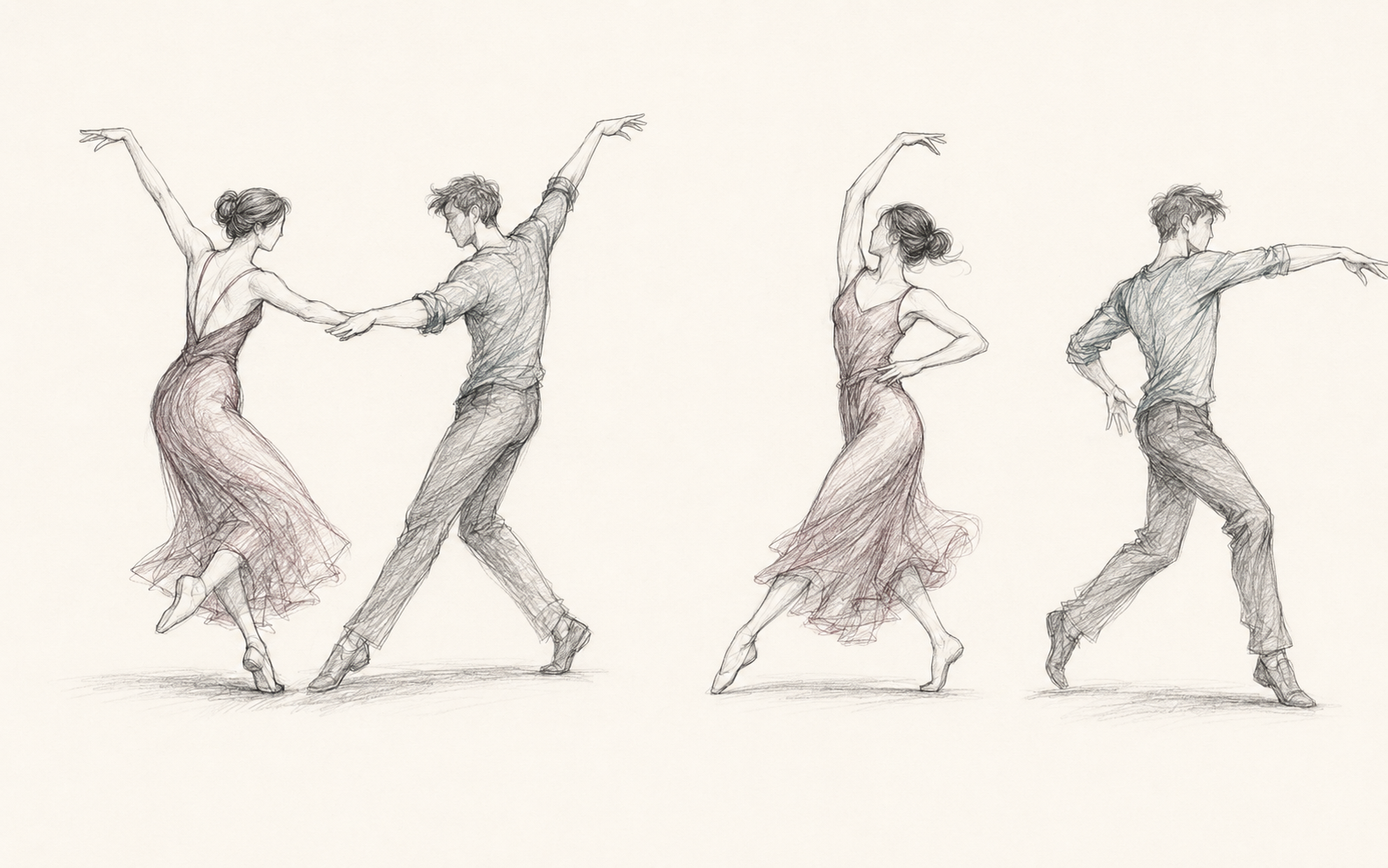
Acting jointly differs from acting in parallel, as anyone who has ever walked, cooked, or danced a tango with a friend knows. This fundamental distinction permeates daily experience and is crucial for understanding human sociality.
Yet investigating this distinction immediately confronts us with a tangle of unresolved basic questions. What makes an action joint rather than parallel? What processes cause agents to act jointly rather than in parallel? How do these processes interface?
The JOINT project addresses these questions by integrating philosophy and cognitive neuroscience to develop and empirically validate a novel theory of joint action. The theory respects two insights: joint action involves multilevel processes, and any theory must explain how these processes interface.
Philosophical and scientific investigation comparing joint action with carefully matched parallel action.
JOINT will develop a minimal account of joint action centered on the notion of a collective goal. This account will be tested through behavioral, electrophysiological—including dual-EEG and direct electrical stimulation (DES)—and neuroimaging studies comparing agents acting toward a collective goal with agents acting in parallel. These studies will identify the psychological and neural processes underlying genuine joint action and clarify how these processes interact.
The resulting framework will also allow us to investigate the evolutionary pathways leading from parallel to joint action in mice and non-human primates, as well as the developmental trajectories of joint action in typically developing (TD) children and children with autism spectrum disorder (ASD). This research may reveal whether the social difficulties associated with ASD arise, at least in part, from specific impairments in joint action.